
Find Out Who Owns a Genesee County Property
Three records do three different jobs. The municipal assessment roll supplies the owner name used for taxation. FetchGIS ties the address to a mapped parcel. The Register of Deeds holds the recorded instrument that actually transferred ownership. Used together, they separate a current owner from a stale name, a mailing contact, or whoever simply lives there.
- Use the address in BS&A Online's Genesee County collection and choose the correct city or township.
- Copy the parcel number, Owner Name, situs and owner mailing address.
- Search the latest grantee through the Genesee County Register of Deeds and compare the legal description.
- If the name is an LLC, trust, estate or land bank, preserve that capacity and check the proper entity or court source.
- Owner of record
- The person or entity named on the current roll or governing recorded instrument.
- Title
- The legal interest in land, which a public index does not insure or finally adjudicate.
- Grantee
- The party receiving an interest in the deed being examined.
- Situs versus mailing
- The physical property location versus the destination for tax notices.
Answering "who owns" this way builds a documented trail rather than a single database hit. For a closer read of the assessor's present field, see the Genesee County current owner guide.
Choose the Right Genesee County Assessing Unit
Genesee County has no countywide assessor roll. Flint, Burton, Fenton, and the townships each keep their own. The BS&A collection is a shared doorway to them. Pick the municipality that taxes the parcel before trusting any owner result.
Do not lean on the postal city. ZIP boundaries and municipal limits can disagree, and Fenton's city geography spills past one county. FetchGIS can settle the mapped jurisdiction and the parcel number. When the web record is unclear, call the municipal assessor. Bring the full situs address and APN in hand.
Note: Keep both the postal address and taxing municipality because each can be needed in a later ownership check.
Read Genesee County Owner and Mailing Fields Separately
A parcel card can list several names. It can also list several addresses. Neither list implies anyone lives at the site. Consider the official Flint Property Portal sample for 354 E Pulaski Street. It names GENESEE COUNTY LAND BANK as owner. It gives a separate owner address on South Saginaw Street. It also flags the parcel as publicly owned, vacant, and residential. The municipality shown there is the first filter to apply before reading any owner name.
| Parcel-card field | What it contributes | What not to assume |
|---|---|---|
| Owner Name | The roll's named tax owner | That it reflects a deed recorded yesterday |
| Owner Address | Destination used for notices | That the owner resides there |
| Parcel Number | Bridge to map and local roll | That it survived every split or combination |
| Situs | Location assigned to the land | That it matches the mailing city or ZIP |
The captured Genesee County BS&A page shows the collection and detailed-record choices.
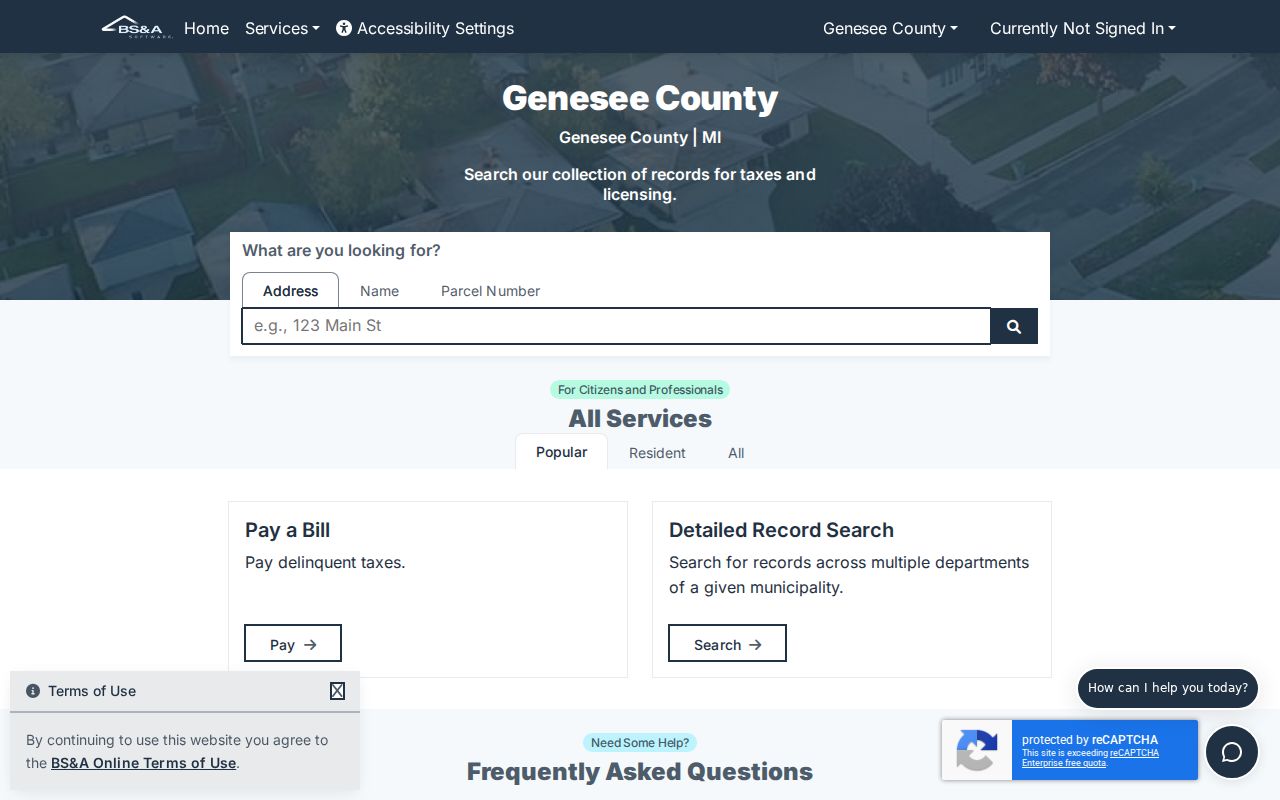
So confirm the correct municipality first; that choice shapes every owner name after it.
Trace the Genesee County Owner to the Latest Grantee
The assessor name is a fast answer, but the deed index confirms it. Search the current name in the Register of Deeds. Narrow the results to recent instruments. Read the grantee, grantor, recording date, document number, and legal description. The newest deed covering the parcel can outrun the tax roll.
The county offers a free public name list without images. Subscriber searching adds address, legal description, parcel, and document number. The posted fee schedule lists a single-name search at $8.75. Images run $1 per page; confirm current prices before paying. When a web search cannot resolve the instrument, the Register counter is the fallback.
The official Register page displays its online search, instructions, fees, and fraud-alert sign-up routes.
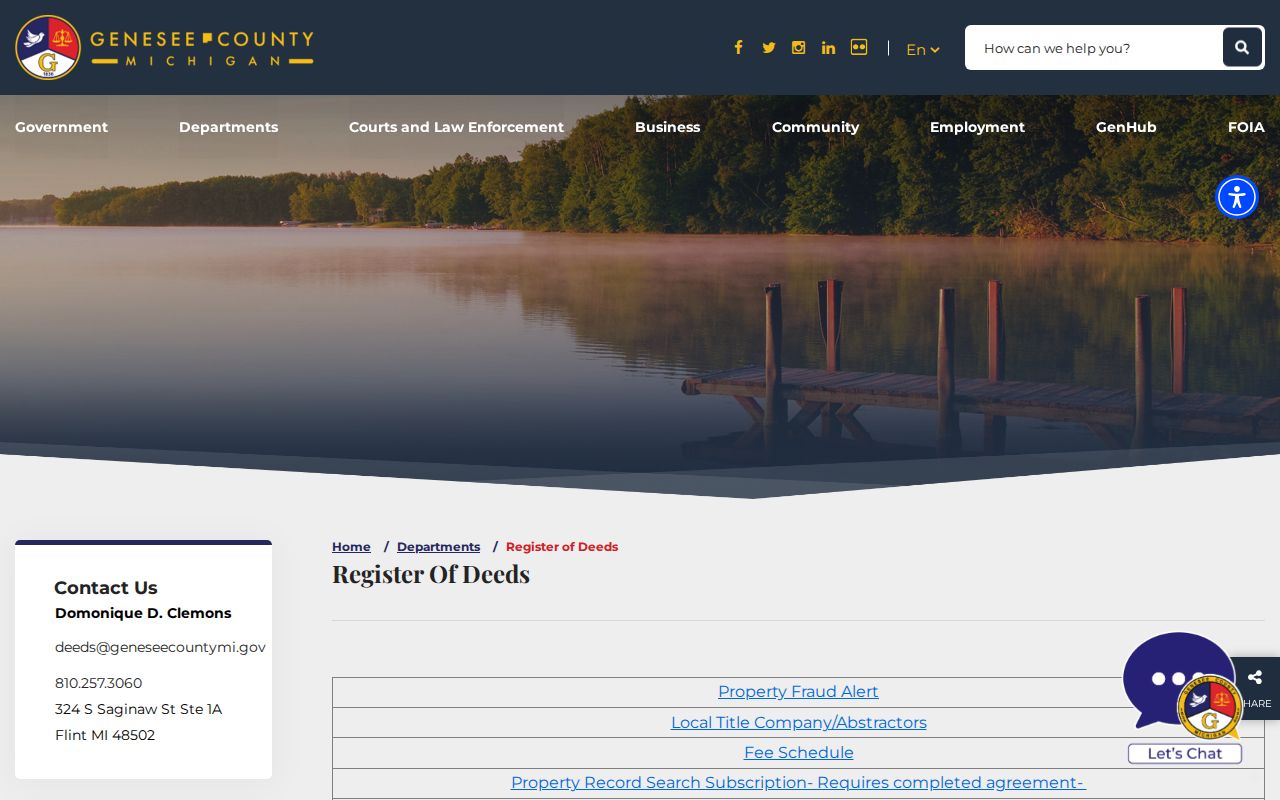
Let those office routes settle the record; treat any compilation as a lead, not proof.
Resolve a Genesee County Sale Not Yet on the Roll
The county publishes no official median. It gives no timeline for how long a sale takes to reach the roll. Compare the assessment or tax year on the parcel card against the latest deed recording date. If the closing was recent, ask the municipal assessor when the roll refreshes.
A deed executed at closing and one accepted for recording are different moments. Use the recording reference the Register provides. The parties, legal description, or parcel relationship may stay murky. If so, bring in a title professional instead of forcing an answer.
Identify a Genesee County LLC, Trust or Estate Owner
Sometimes "who owns" returns an entity or a fiduciary capacity instead of a person. Copy the grantee exactly. Watch LLC punctuation and words like trustee, estate, or personal representative. Michigan's LARA corporation search supports lookups by entity name, identification number, and filings.
An entity filing can show status, registered office or agent, and filing history. It cannot prove the agent or officer personally owns the land. A trust may turn on capacity language in the deed itself. An estate transfer may require the probate file or a later fiduciary deed.
Watch Future Genesee County Owner Filings
The Register links Property Fraud Alert. It is a service that notifies registrants when a name appears in a new filing. It is an early-warning tool, not a substitute for a title search. It also does not replace title insurance or fixing a bad instrument. Name variants matter, so register each relevant version under the service's directions. The county-linked selection page lists Genesee County among the available jurisdictions.
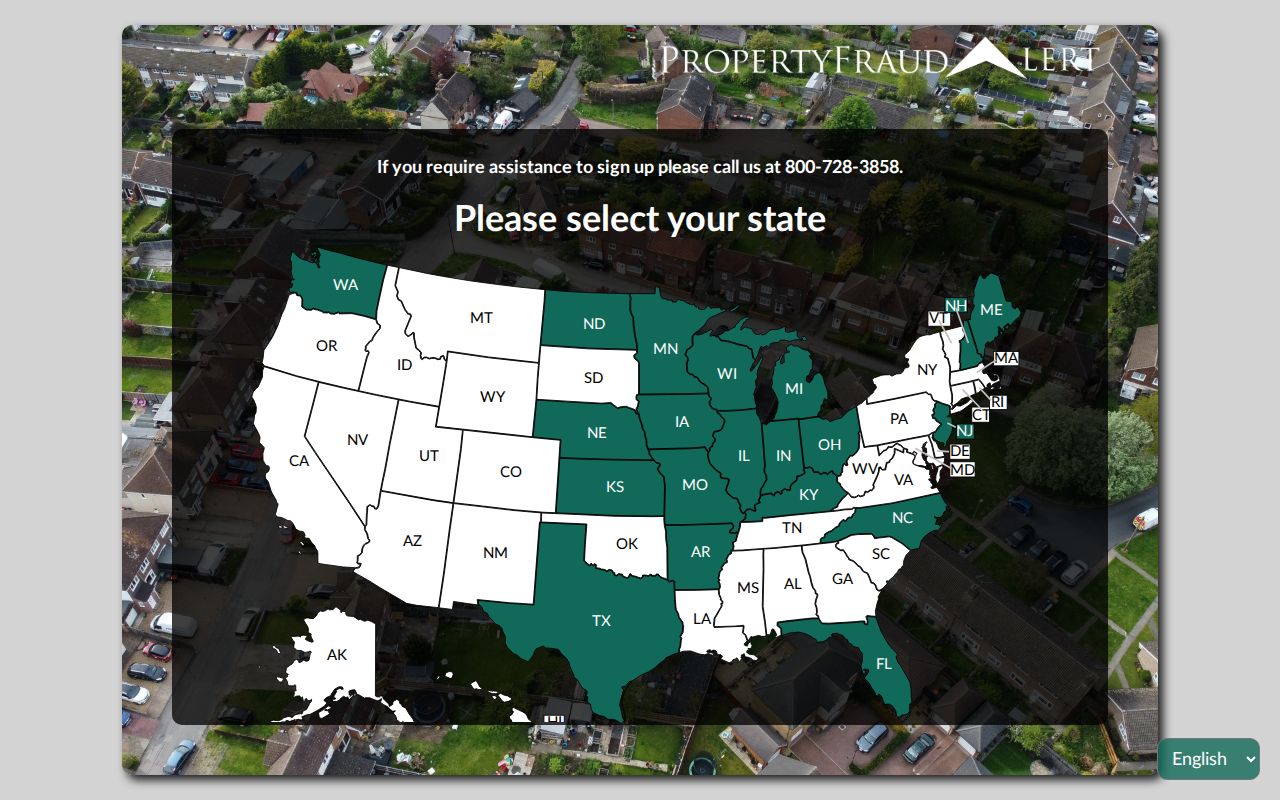
An alert should prompt a check with the Register using independently published contact information.
See Where Genesee County Property Ownership Appears
No single record answers every ownership question. The local roll is fastest. The deed records the transfer. GIS links the street to the parcel, and an entity filing explains only the public company record. Owner searches in Genesee County work best when these pieces agree.
| Source | Owner information supplied | Freshness and access |
|---|---|---|
| Municipal assessor roll | Owner Name, mailing address, situs and parcel | Public current roll, but a recent transfer may lag |
| Register of Deeds index | Grantee, grantor, date, type and recording reference | Free name list; images and added modes may cost |
| FetchGIS | Mapped parcel, APN and supplied land fields | Public reference layer with its own update cycle |
| LARA entity search | Company status, agent, office and filings | Public business record, not beneficial ownership proof |
Understand Genesee County Owner Lookup Limits
An owner lookup can name the roll entry and lead to the deed, yet it cannot show who occupies a home, settle competing claims, or expose every beneficial interest behind a trust or company. Michigan's Address Confidentiality Program can withhold certain protected addresses, and recorded documents may carry lawful redactions. Property records in Genesee County answer ownership questions within those limits.
A name is not a title search. A Genesee County roll name may be stale or held by an LLC or trust. Use owner information only for lawful property research and never to harass or target anyone.
Legal certainty calls for more than a basic owner result. A formal title search pulls together deeds, liens, easements, probate orders and other instruments that a simple lookup leaves out. The phone works too. The Register lists 810-257-3060, and its county page shows a counter at 324 South Saginaw Street, Suite 1A, Flint. A state directory lists a different official address at 1101 Beach Street, so call before visiting in person. Bring the owner spelling, parcel number, recording date and any legal-description clue. For assessment roll questions, contact the city or township assessor rather than asking the Register to interpret tax fields.
A written public-record request has a narrower role. Michigan's Freedom of Information Act can reach existing nonexempt county records. It cannot force an office to create an ownership report or hand over a title opinion. Use the county FOIA route only when the existing record you need is unavailable through the normal counter, portal or copy process.
Keep a brief source log as a final step. Record the municipality selected, the assessment year, the parcel ID, the date the GIS was viewed, and the newest deed reference found. If sources disagree, that log sharpens the follow-up question. It also stops a later researcher from mistaking an old screenshot for a current owner answer.